


Unity


Mural Citation
Allen Carter, Ligia Becker, and youth apprentices; Old Morgan School Place and Champlain St. NW; 1970s.
Mural's Story
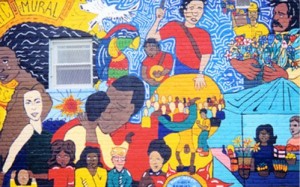
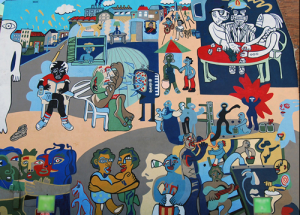
The faded but still proud mural on the wall of the PEPCO substation adjacent to the Marie Reed Community Learning Center was created as a summer youth project under the supervision of the late Allen Carter (“Big Al”), and Ligia Becker, a Columbian artist with ties to Centro de Arte. The Adams Morgan neighborhood, a blended African American and white community, had absorbed a large number of Latino immigrants in the 1970s. The title of the piece, Unity, suggests the theme of the mural painted by 11 youths of disparate cultures and ethnicities.
According to Norris Vassell, who worked on the project as a youth and still lives in the area, Big Al asked each participant to create an image reflecting his or her original homeland or cultural background. Vassell’s piece is the woman with a basket of fruits and vegetables on her head to the upper right of the large dragon at the center. The scene was characteristic of Jamaica, from which he emigrated at age 16 with his parents.
The center section evokes the scaled serpent or dragon popular in Aztec mythology and art, while the numbers tumbling from its mouth are a nod to the mural’s location at the Learning Center — perhaps indicating the power of knowledge and education. Just above the dragon a pair of colossal Olmec heads pay homage to one of meso-America’s original cultures. A butterfly and flower in the upper right corner of the mural represent native Central American flora and fauna, while the type of pendant shown at left was a popular adornment for Latino youth at the time.
Allen Carter (BFA, Columbus College of Art and Design, OH) taught art in Virginia schools for 30 years, and also worked with youth in a variety of community programs. His own work included oils, etchings, and Eastern-inspired line drawings, as well as murals. He had more than 50 solo exhibitions during his lifetime, and his styles spanned the history of modernism, partaking of expressionism, cubism, and the fauves; many pieces incorporated household or found objects. At his death in 2008 he left 20,000 uncataloged art works, some of which have been displayed in retrospectives at Vanderbilt University (Nashville, TN) and the Tweed Museum of Art at the University of Minnesota in Duluth.
The Unity project was partially funded by the Comprehensive Employment and Training Act (CETA), a federally sponsored jobs program administered by the U.S. Department of Labor to alleviate high unemployment during the recession of the 1970s. George Koch, an arts activist and longtime advisor to this mural documentation project, guided the direction of DC’s highly successful CETA arts initiative while on staff at the U.S. Department of Labor’s Employment and Training Administration; project advisor Teresa Grana was also instrumental in the local program.
related projects
-
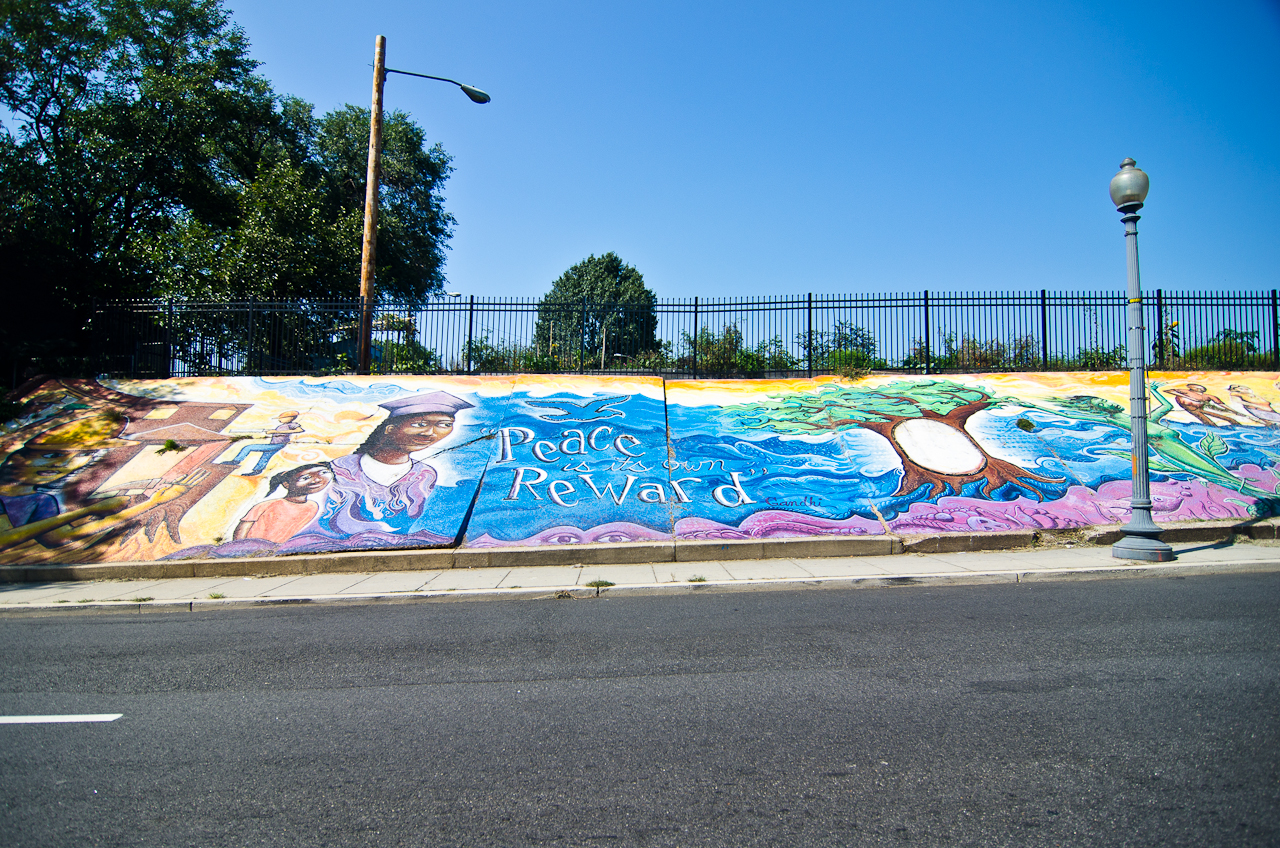 Learning through arts and community service
-
 Chuck Brown tribute in Parkview
-
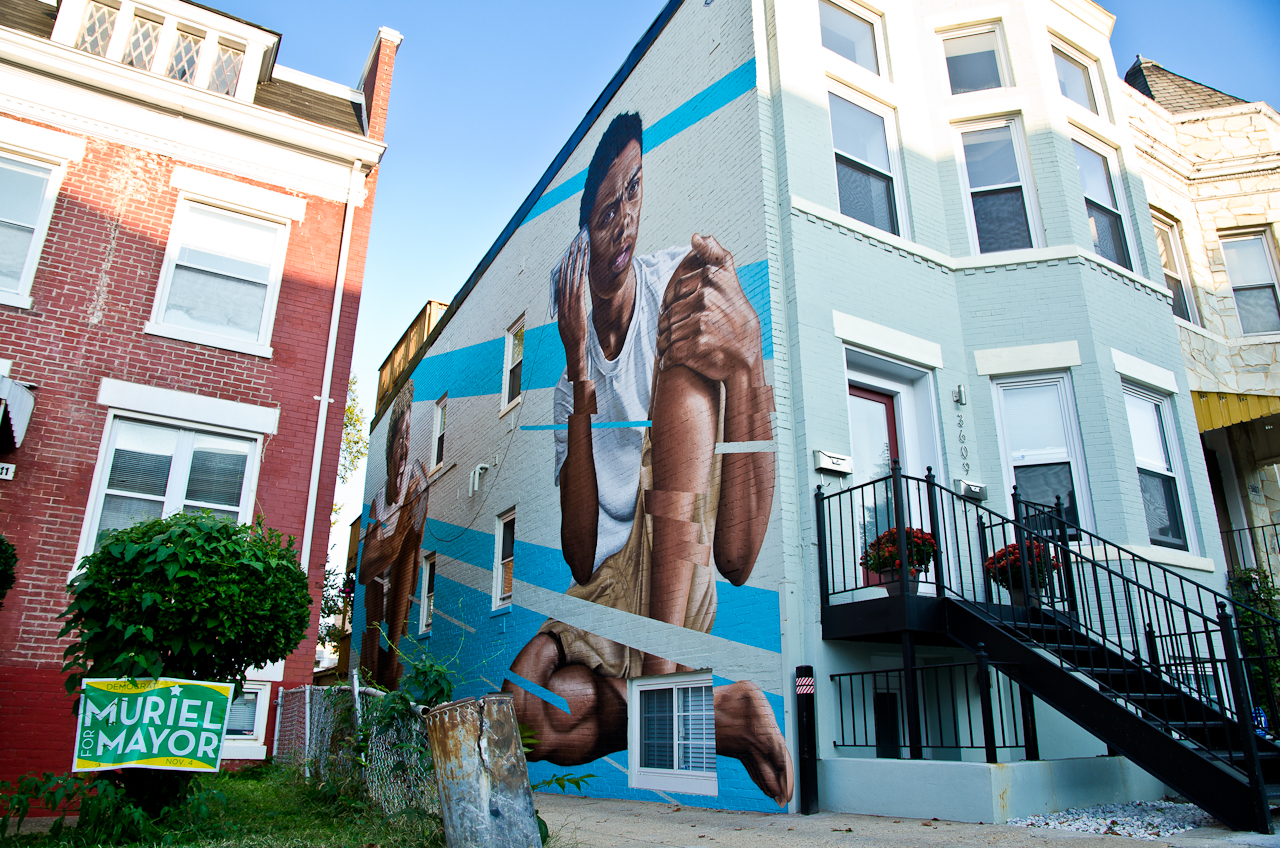 Communication in Columbia Heights
-
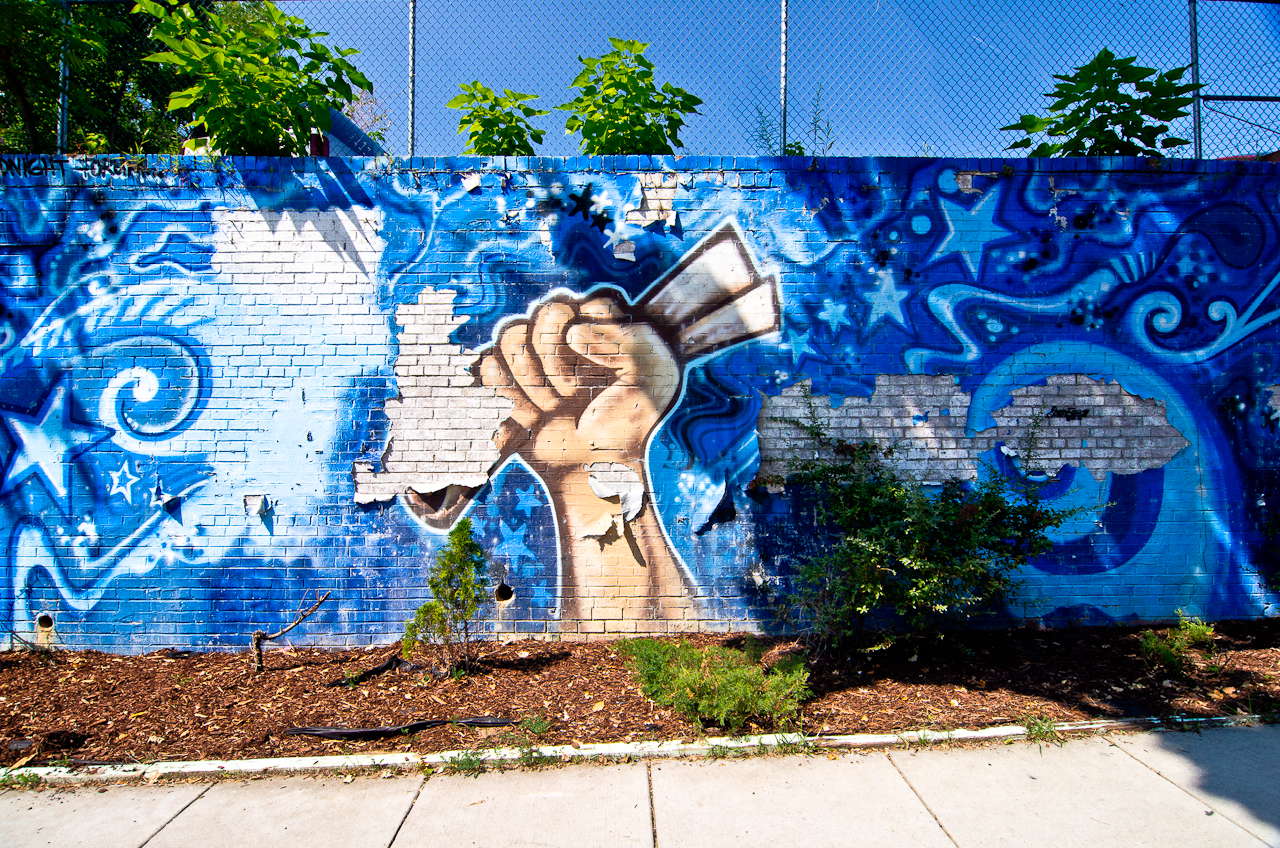 This education themed mural was painted in the inaugural year of MuralsDC, a citywide anti-graffiti initiative.
-
 This mural near Howard relates seasons of the year with seasons of life, a theme suggested by the building owner.
-
 Daughter of Oshun in the World. (Ward 1; front and side of Hooked Seafood Restaurant.) 3200 Georgia Ave., NW. 25’ x 15’; acrylic on wood. Joel Bergner, 2008. Sponsored by DC Commission on the Arts and Humanities.
-
 Iconic heroes in a colorful new context at the refurbished Parkview Recreation Center in Northwest.
-
 Vignettes represent Columbia Heights, past and present.
-
 Many layers of Latino identity in Columbia Heights.
-
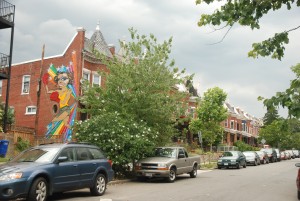 Boxer Girl (2009), Lisa Marie Thalhammer. 1st and W Sts., N.W., private home, alley side. enamel on brick (Ward 1, Bloomingdale). Sponsor: D.C. Commission on the Arts and Humanities.
-
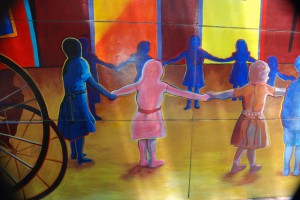 Children learn the colorful history of their Shaw neighborhood through this playground backdrop.
-
 Creator’s Gift was the first public mural “east of the river,” painted on the wall of a bakery at Division and Nannie Helen Burroughs Aves., N.E.
-
 The full title is a pun—“A people without murals is a demuralized (i.e., demoralized) people.”
-
 The mural impetus came to fruition at Howard under the leadership of Jeff Donaldson, Ph.D., the artist and scholar who joined the Department of Fine Arts in 1969.
-
 This mural at Howard University highlights the connection between traditional African art and modernism.
-
 Washington’s renowned native son and jazz artist looks down on the neighborhood where he grew up.